
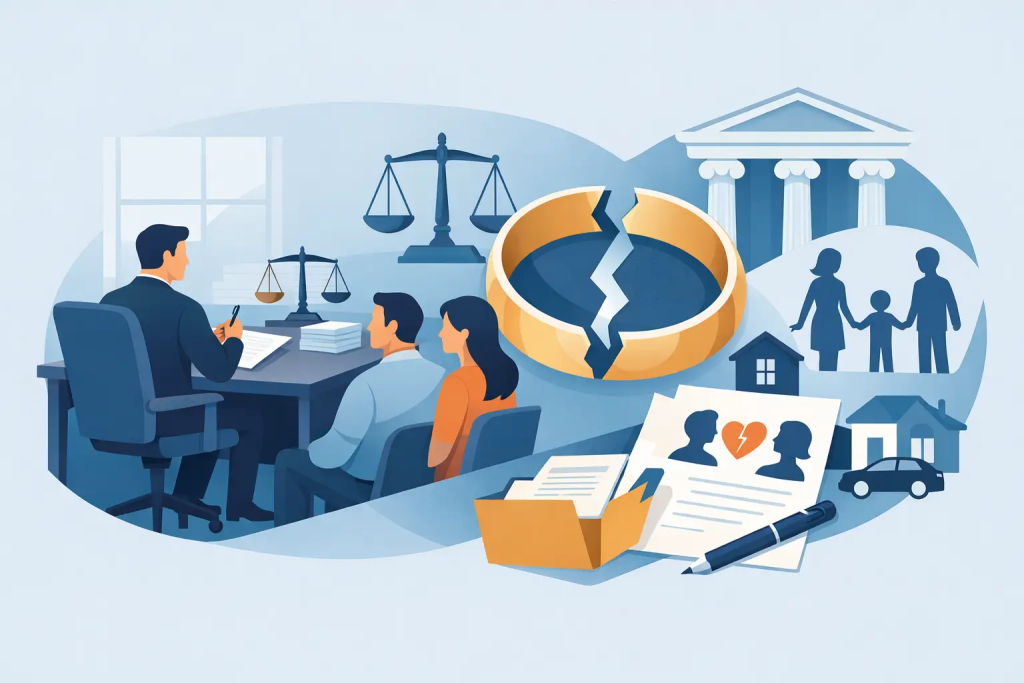
The moment divorce becomes real, most people are not asking abstract legal questions. They are asking practical ones. Who stays in the house? What happens with the kids? How will bills get paid? A divorce lawyer helps answer those questions, protect your rights, and bring structure to a process that can feel personal, emotional, and financially uncertain.
For many people, the hardest part is not just the end of a marriage. It is the fear of making a costly mistake while under pressure. A casual agreement about custody, support, or property may sound reasonable in the moment, but if it is unfair, incomplete, or not properly entered as a court order, it can create lasting problems. Good legal guidance is not about making conflict worse. It is about making sure important decisions are made carefully and with a clear understanding of the consequences.
Why people hire a divorce lawyer
Some divorces are relatively cooperative. Others involve deep disagreement, hidden financial concerns, parenting disputes, or a history of intimidation. In either situation, a divorce lawyer serves an important role. Your attorney explains the law, prepares the required filings, negotiates when settlement is possible, and advocates for you in court when settlement is not.
That work matters because divorce is not a single issue. It often includes several legal questions at once, including division of assets and debts, child custody, visitation, child support, spousal support, and requests for temporary orders. If one spouse controls the finances or has more access to information, the other spouse can be at a real disadvantage without representation.
A skilled attorney also helps separate what feels urgent from what actually requires immediate legal action. Not every frustration needs a courtroom fight. On the other hand, some situations do require prompt attention, especially if children are involved, support is being withheld, or one party is attempting to move money or property.
What a divorce lawyer handles during the case
At the beginning of a case, a divorce lawyer usually starts by gathering the facts. That includes the length of the marriage, the family structure, income, assets, debts, and any immediate concerns involving safety or parenting time. From there, the attorney can explain the likely legal issues and the options available.
One major part of the job is paperwork and procedure. Divorce cases involve deadlines, disclosures, formal requests, and court rules that are easy to underestimate. Missing a deadline or filing incomplete information can delay the case and damage your position. An experienced lawyer keeps the case moving and makes sure the court receives what it needs.
Another major part is negotiation. Many cases resolve through agreements rather than trial, but productive negotiation only works when both sides understand the facts and the law. A lawyer can identify where compromise makes sense and where it does not. That balance matters. Settling too quickly can leave money, parenting rights, or long-term security on the table. Refusing every compromise can increase cost and stress without improving the result.
If the case cannot be resolved by agreement, the lawyer prepares for hearings or trial. That includes organizing evidence, presenting arguments, questioning witnesses, and making sure your position is clearly explained to the judge. In contested family law matters, courtroom experience is not a minor detail. It can directly affect strategy, leverage, and outcome.
Divorce lawyer issues that matter most
Every divorce has its own facts, but a few issues tend to shape the case more than others.
Property and debt division
People are often surprised by how complicated financial division can become. It is not always just a matter of splitting a bank account. There may be retirement plans, real estate, business interests, separate property claims, credit card debt, reimbursements, or disagreements about how assets were used during the marriage.
A divorce lawyer helps identify what exists, what may need further valuation, and what division is likely to be considered fair under California law. In some cases, the key issue is not the total value of the estate but whether one spouse has full knowledge of it. Transparency is essential. If something is being concealed or minimized, legal tools may be necessary to uncover the full picture.
Child custody and parenting plans
When children are involved, legal strategy has to stay grounded in their best interests. That sounds simple, but real families are not simple. Parents may disagree about schedules, school choice, travel, communication, or decision-making authority. One parent may worry the other is unreliable or disruptive. The other may feel excluded or unfairly judged.
A divorce lawyer helps turn those concerns into a workable parenting plan. The goal is not to reward one parent or punish the other. The goal is to create stability, protect the parent-child relationship, and address legitimate concerns in a way the court can enforce.
Support obligations
Child support and spousal support can be major sources of tension, especially when income fluctuates or one spouse has been financially dependent during the marriage. Temporary support may be needed early in the case. Long-term support may depend on the length of the marriage, earning capacity, standard of living, and other legal factors.
Support is one of those areas where people often rely on assumptions that turn out to be wrong. A lawyer helps you understand what the court will actually consider, what documentation is needed, and whether the numbers being proposed are realistic.
When hiring a divorce lawyer is especially important
Not every case has the same level of risk, but there are certain situations where hiring counsel becomes particularly important. If your spouse already has an attorney, you should take that seriously. If there are significant assets, a family business, retirement accounts, or separate property claims, legal and financial details matter. If there are custody disputes, allegations of abuse, or one spouse is controlling access to money, delay can make the problem worse.
Even in a case that begins amicably, tension can rise as decisions get more specific. People may agree in principle that they want a fair resolution, then sharply disagree once they discuss the home, support, or parenting schedule. Having counsel early can help prevent confusion and protect your position before avoidable mistakes are made.
What to look for in a divorce lawyer
Experience matters, but not in a vague marketing sense. You want a lawyer who understands family court procedure, communicates clearly, and knows when to negotiate and when to stand firm. Divorce clients are often under stress. They do not need legal jargon or unanswered questions. They need direct advice they can use.
It also helps to work with someone who can handle both routine and contested matters. Some cases settle quickly. Others do not. An attorney with real trial experience is often better positioned to prepare the case thoroughly from the start, which can improve both settlement discussions and courtroom readiness.
Local knowledge can make a difference too. A lawyer who regularly handles family law matters in the area will usually have a better sense of court expectations, filing practices, and how similar disputes are often addressed. For individuals in North County San Diego, working with a firm such as Thomas D Nares, APC may offer the benefit of both local familiarity and decades of family law experience.
The value of clear legal guidance
A good divorce lawyer does more than file papers and show up at hearings. The attorney helps reduce confusion. That alone can be valuable when emotions are high and every decision feels loaded. Clear explanations allow you to make informed choices rather than reactive ones.
That does not mean your lawyer can remove all difficulty from the process. Divorce is rarely easy. There may be setbacks, frustration, and moments when the other side is unreasonable. But with careful preparation and practical guidance, the process becomes more manageable. You can focus less on guessing what happens next and more on protecting your future.
The right legal approach depends on the facts. Some cases call for patience and negotiated resolution. Others require firm court intervention. What matters is having someone who can recognize the difference and act accordingly.
If you are facing divorce, do not measure the value of a lawyer only by whether the case goes to trial. Measure it by whether your rights are protected, your questions are answered, and your next steps are clearer than they were before.
 EN
EN  ES
ES